|
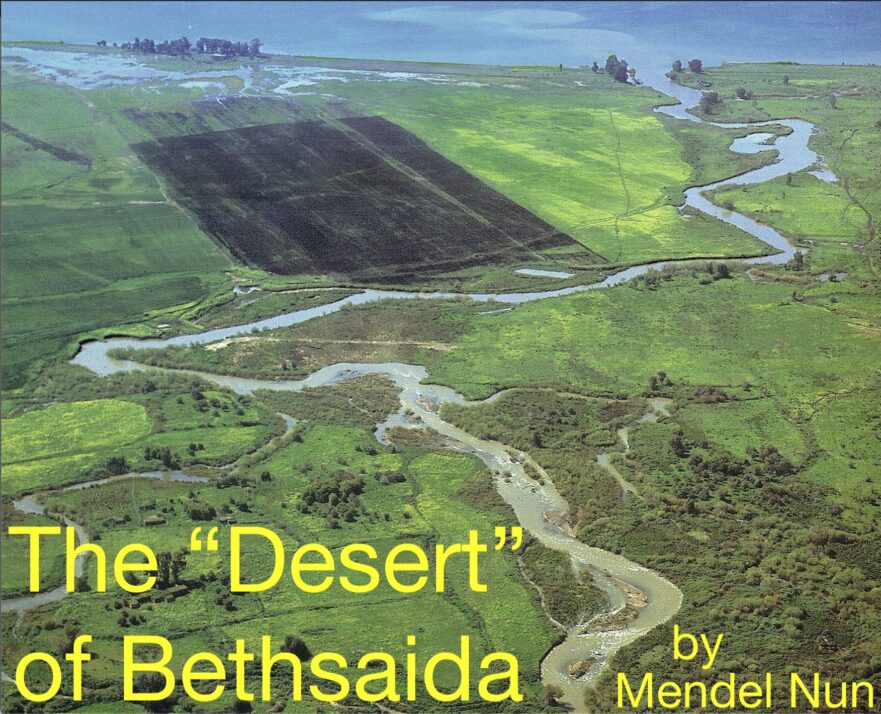
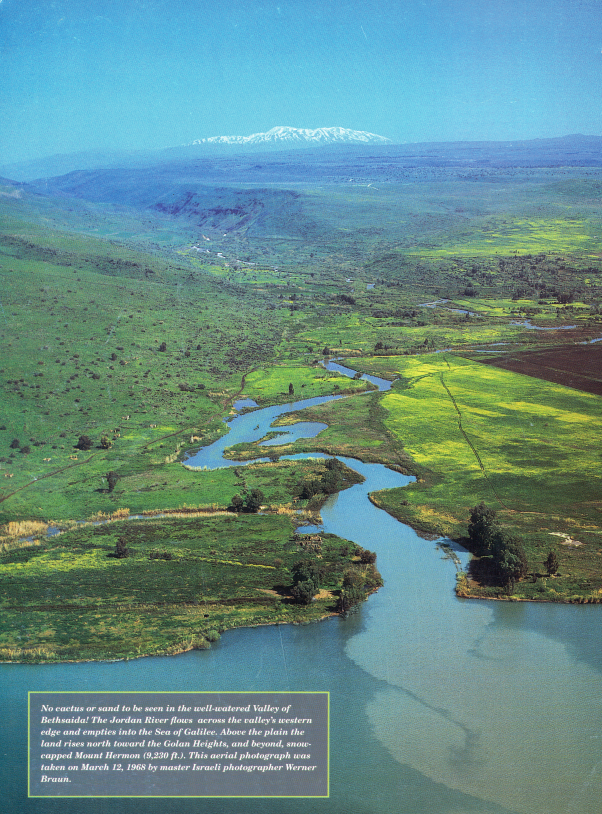
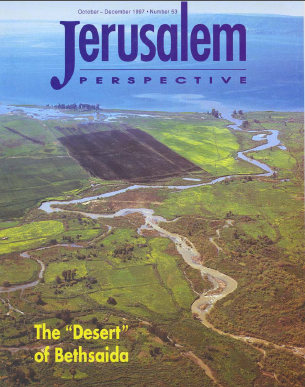
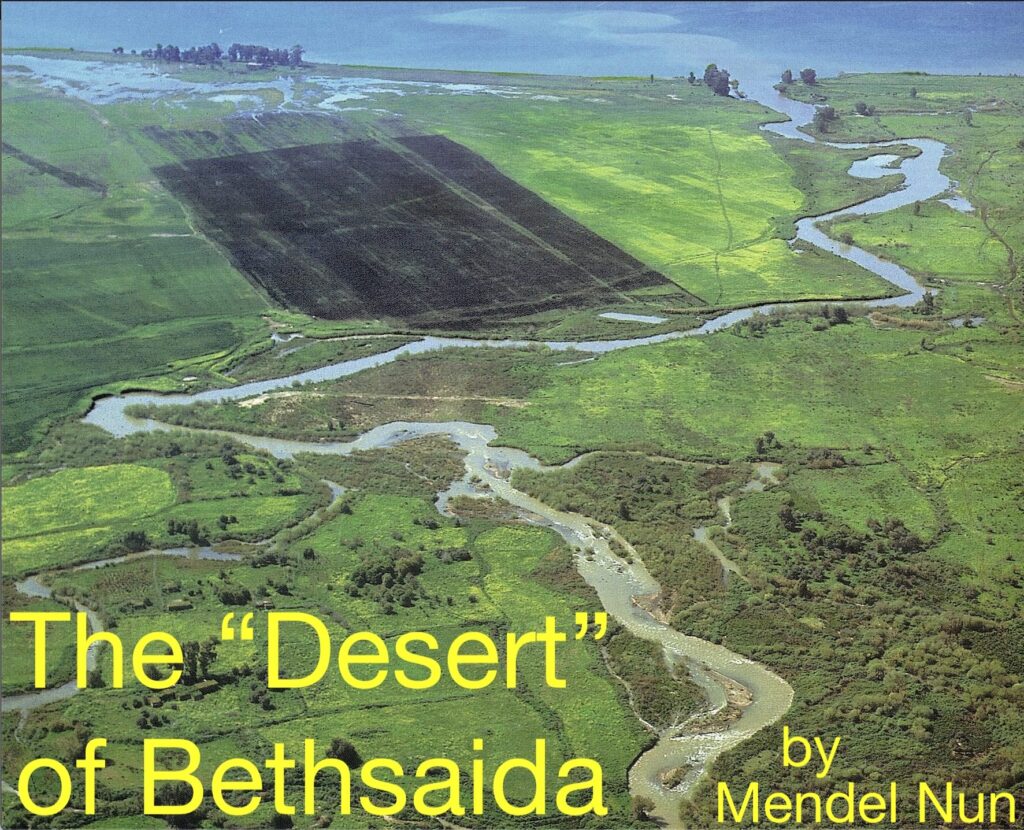
Photo Above: Swollen by heavy rains, the Jordan River winds its way sough through the Bethsaida Valley and flows into the Sea of Galilee. A square of recently plowed land displays the fertile, black soil of this “desert.” The grove of trees on the lakeshore marks the location of ancient Bethsaida. Photograph by Werner Braun. |
How to cite this article:
Mendel Nun, “The ‘Desert’ of Bethsaida,” Jerusalem Perspective 53 (1997): 16-17, 37 [https://www.jerusalemperspective.com/2796/].
The miracle of the Feeding of the Five Thousand as described in the gospels (Matt. 14:13-21; Mark 6:30-44; Luke 9:10-17; John 6:1-13) raises an interesting question regarding the location of the miracle. Mark and Matthew both refer to it as a “desert place,” but also note that it was green. John does not mention a “desert place,” stating instead that there was “much grass in the place.” In Luke we are told that Jesus went into “a desert place belonging to Bethsaida.”
Fertile Bethsaida
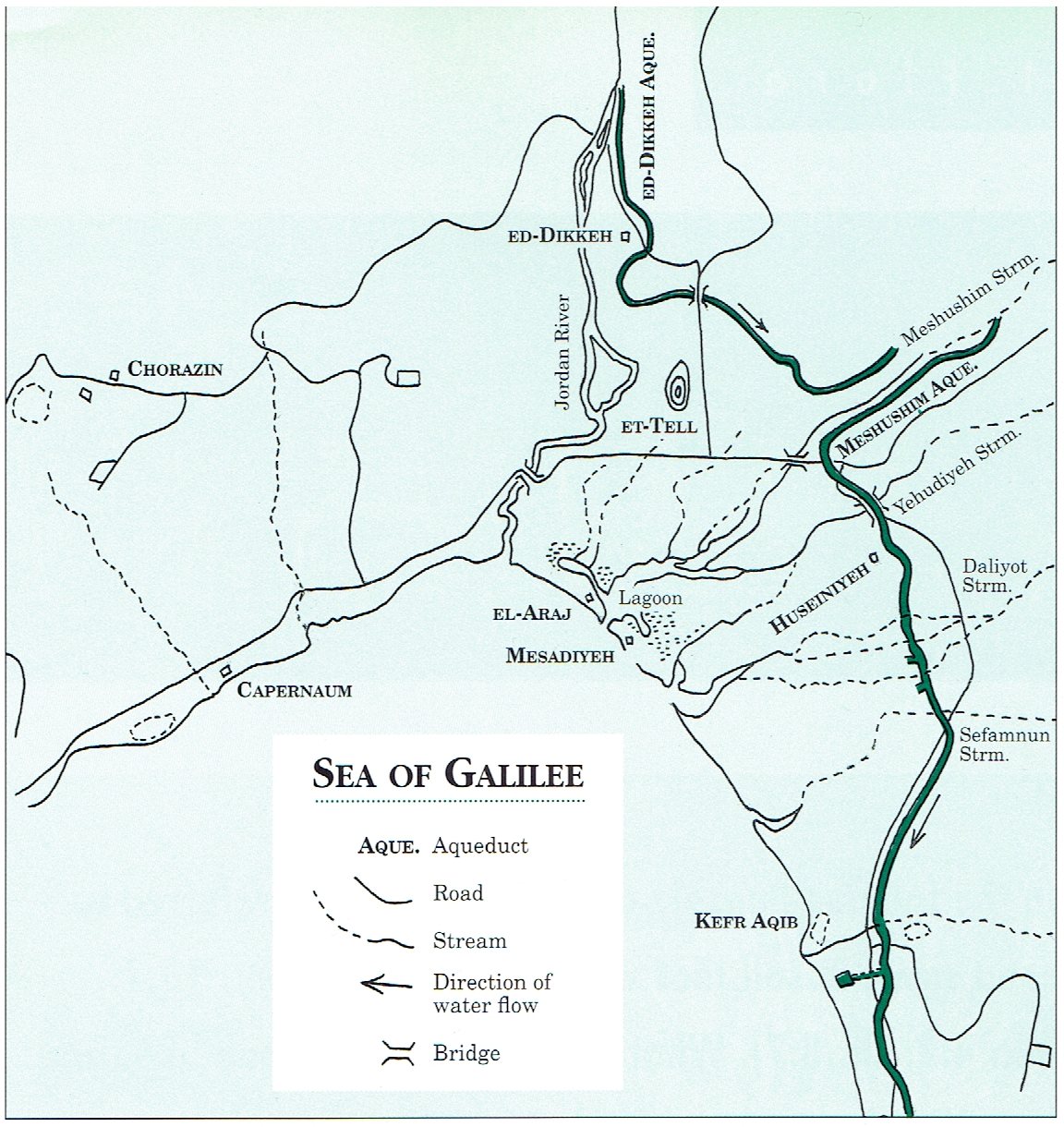
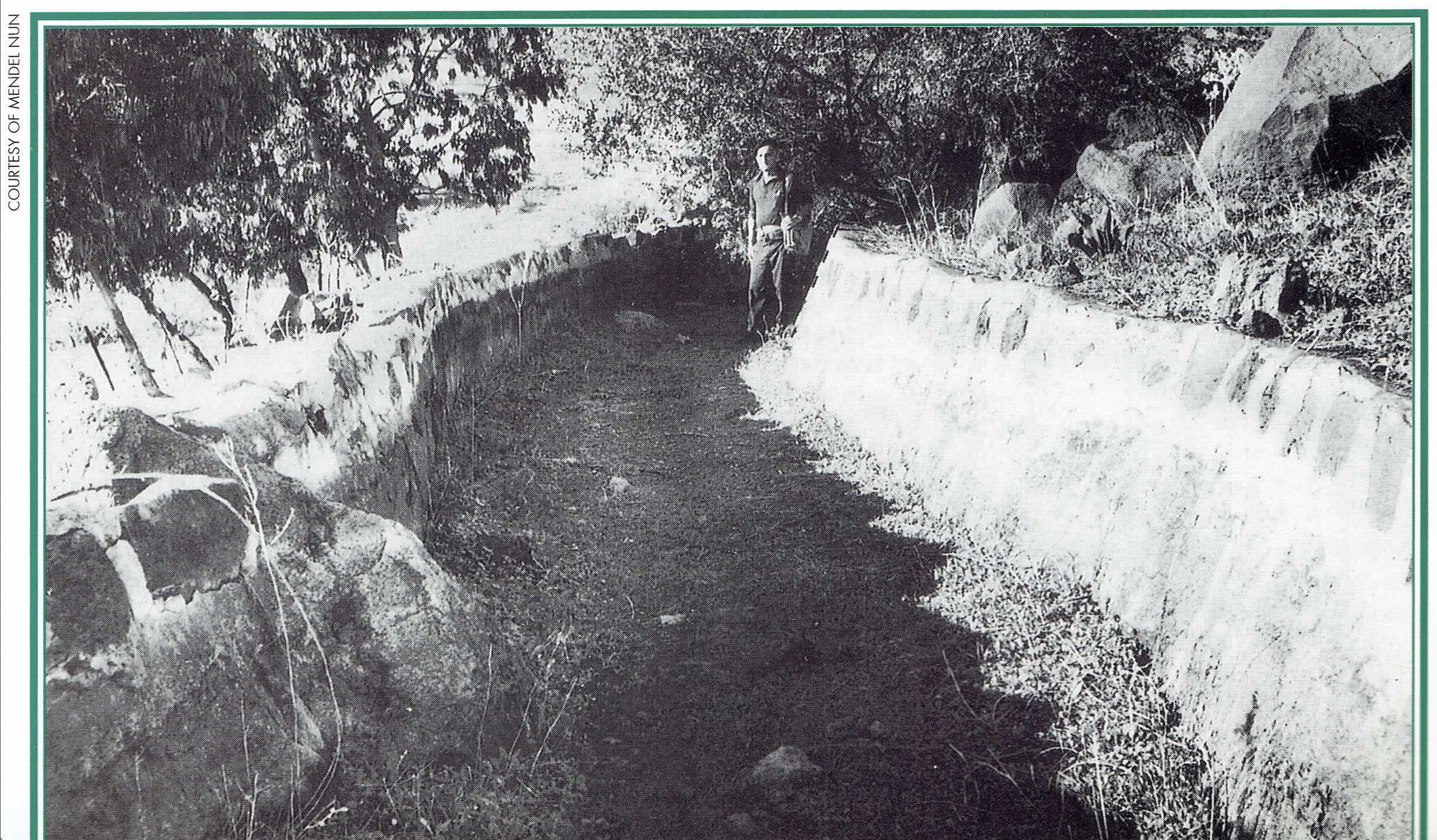
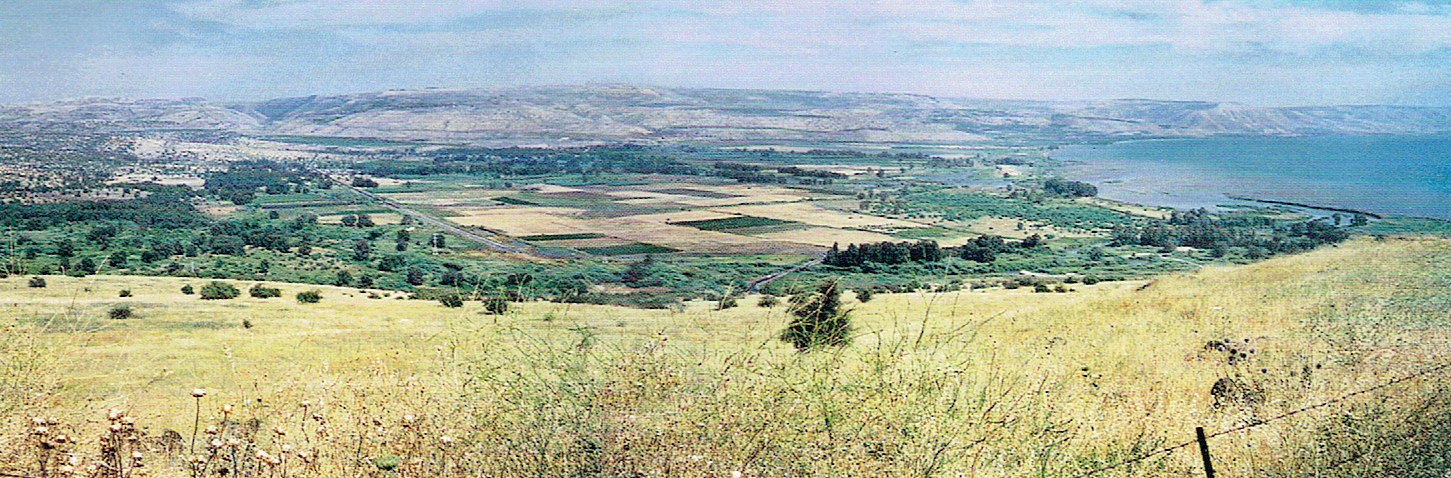
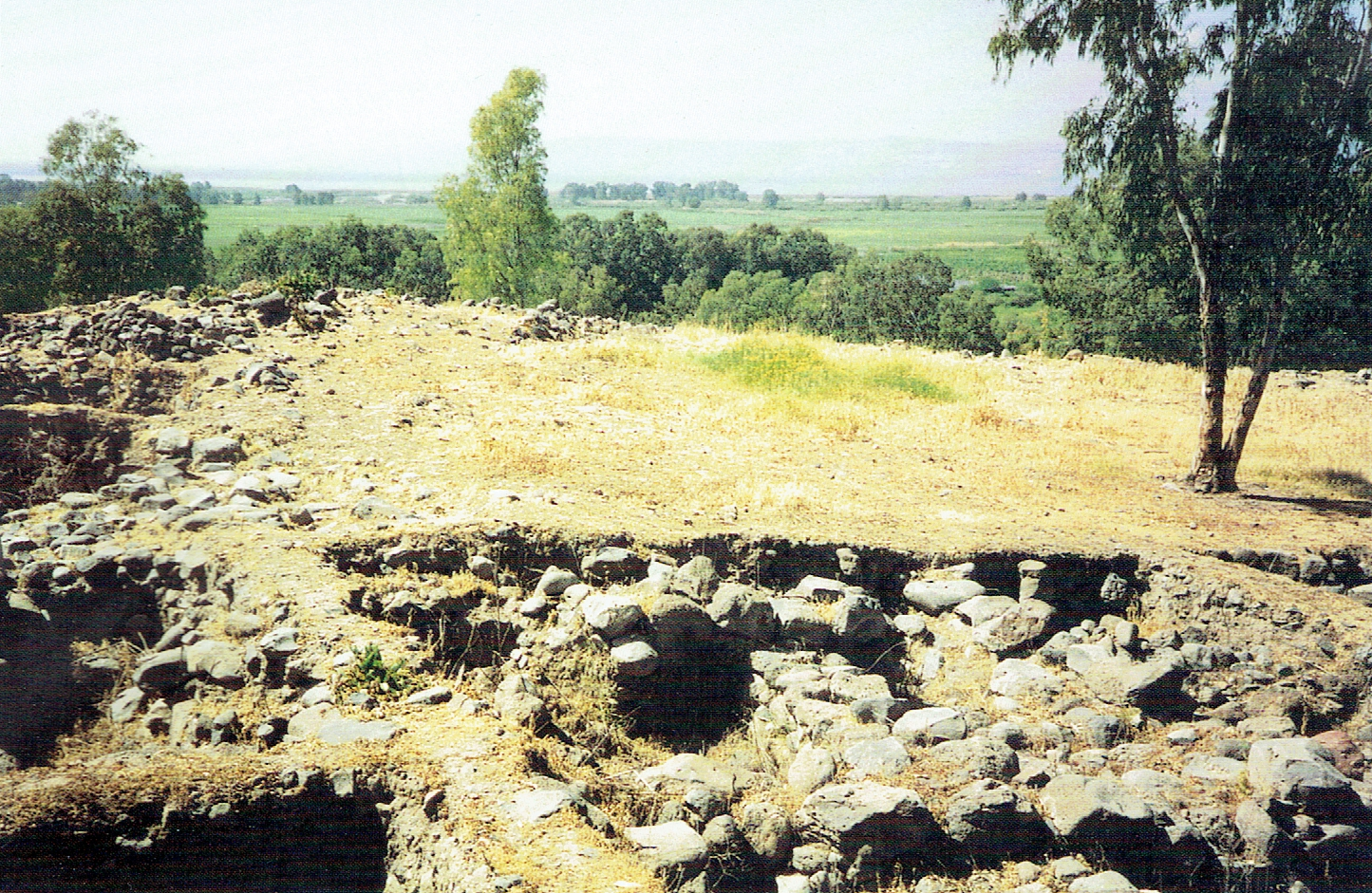
The idea of a “desert place” near Bethsaida seems strange. Bethsaida (modern el-Araj) was a first-century fishing village on the northeastern shore of the Sea of Galilee. The village was located in a small (approx. 12 sq. km., or 4.63 sq. mi.) but fertile plain or valley, the Valley of Bethsaida. This valley is crisscrossed by streams, aqueducts and irrigation canals. The area is not at all what we think of as a “desert.”
Furthermore, the place was hardly a “desert” if the disciples wanted to send the crowds to buy bread in the nearby villages. “Villages” would seem to indicate a settled area. These textual difficulties call for some explanation. In my opinion, one may be found in the problems of translation.
Double Meaning
It is widely believed that the earliest gospel or gospels were written in Hebrew or Aramaic. The Hebrew equivalent of “desert of Bethsaida” would be midbar Bethsaida. The renowned philologist Gustaf Dalman (d. 1941) suggested the Aramaic equivalent, madbera debet sayda.
The English word “desert,” coming to us from Latin, means an uninhabited, uncultivated, barren, waterless and treeless region. But in the Hebrew and Aramaic of Jesus’ time the word for “desert” had two meanings. One was the same as in modern usage. But the other indicated a “pasturing place.”[1] The “midbar of a city” referred to the area of pasture for flocks belonging to the residents of a city. In my opinion, the translator who first rendered the word in Greek was not aware of this second meaning.
Thus, references to “desert place” in the gospel accounts of the Feeding of the Five Thousand do not indicate a barren, waterless area, but the lush, grazing land surrounding Bethsaida.

Question from Colin Barnes (Brassall, Queensland, Australia) that was published in the “Readers’ Perspective” column of Jerusalem Perspective 54 (Jul.-Sept. 1998): 8, 10.
I enjoyed Mendel Nun’s article, “The ‘Desert’ of Bethsaida.” Would the use of midbar here denote land that is not owned by any individual, and is therefore not ploughed? This would make it akin to the village common of old, where everyone from the village was free to graze their sheep or cow. Jesus would then have been meeting the villagers on “common ground.”
Response Revised: 28-September-2012
David Bivin responds:
Not only is “a pasturing place” one of the meanings of מִדְבָּר (midbar), a word that occurs 271 times in the Hebrew Bible, this meaning is the word’s primary meaning (see Avraham Even-shoshan, Ha-Millon He-Hadash [Jerusalem: Kiryath Sepher, 1972], p. 630). For an example of this usage, note Jeremiah 2:2 (compare Bava Kamma 7:7 in the Mishnah).
Professor Shmuel Safrai has pointed out to me in a private conversation a good example of the use of midbar in the sense of “a pasturing place” or “the common grazing land of a settlement.” In a story found in rabbinic literature (Ecclesiastes Rabbah 1:1 and Song of Songs Rabbah 1:4), a poor Hasid, Hanina ben Dosa, so poor he has nothing to take as an offering to the Temple in Jerusalem, goes out to the midbar of his village, מדברה של עירו (midbarah shel iro), the lands in public domain, or the “village common” suggested above by Colin Barnes, to search for a stone that he can dress and take to Jerusalem as his offering. For details of the story, see Shmuel Safrai, “Jesus and the Hasidim,” Jerusalem Perspective 42, 43 & 44 (Jan.-Jun. 1994): 15. The events described in this story took place before 66 C.E. while the Temple was still standing.
Read more JP articles by Mendel Nun:
- Has the Lost City of Bethsaida Finally Been Found?
 The scholarly debate over the location of Bethsaida continues to rage. Now, Mendel Nun, an authority on the Sea of Galilee and its ancient harbors, weighs in on the side of el-Araj.
 - The “Desert” of Bethsaida
 By analyzing the meaning of the word translated “desert,” the topography at the Feeding of the Five Thousand can be clarified.
 - What Was Simon Peter Wearing When He Plunged into the Sea?
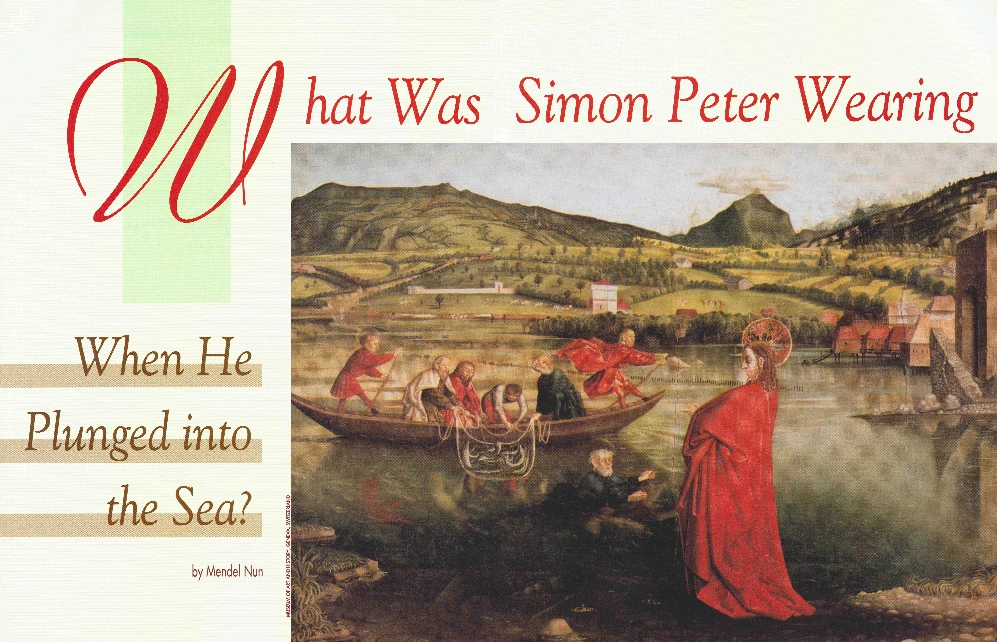 Was Peter actually fishing naked, or was he merely “stripped to the waist,” as the Living Bible says? And what did he put on before swimming to Jesus?
 - Gergesa: Site of the Demoniac’s Healing
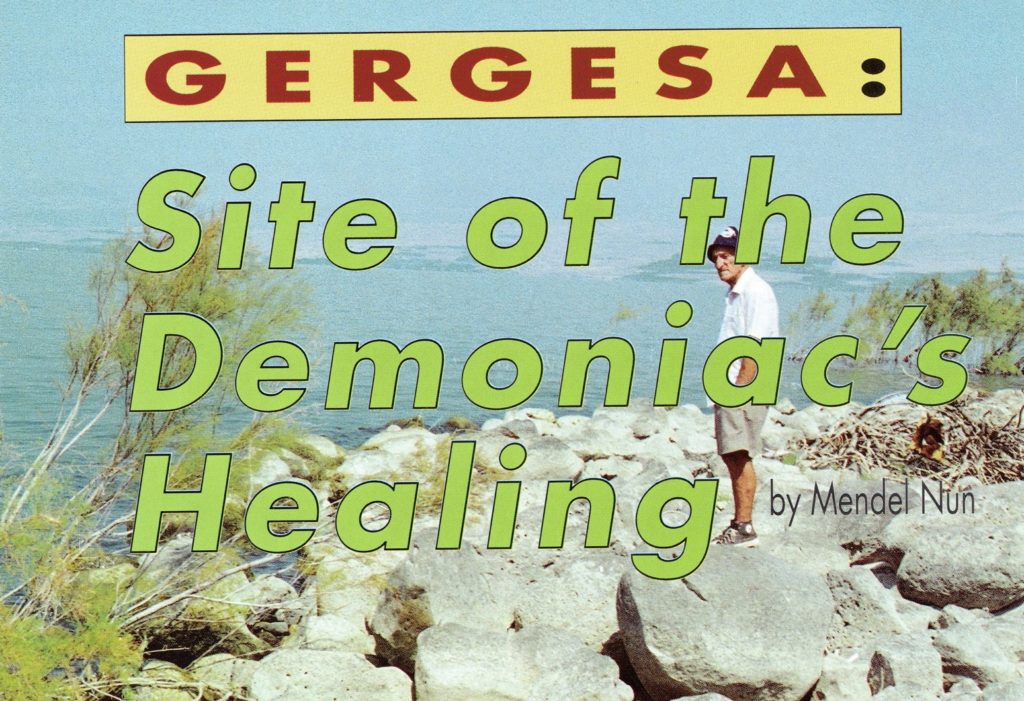 The recent discovery of many of the ancient harbors that ringed the Sea of Galilee is an exciting chapter in Sea of Galilee research. One of these harbors is located at Kursi, ancient Gergesa. In this article, Mendel Nun contends that the demoniac’s healing and the miracle of the swine took place at Gergesa, not Gadara or Gerasa.
 - Fish, Storms and a Boat
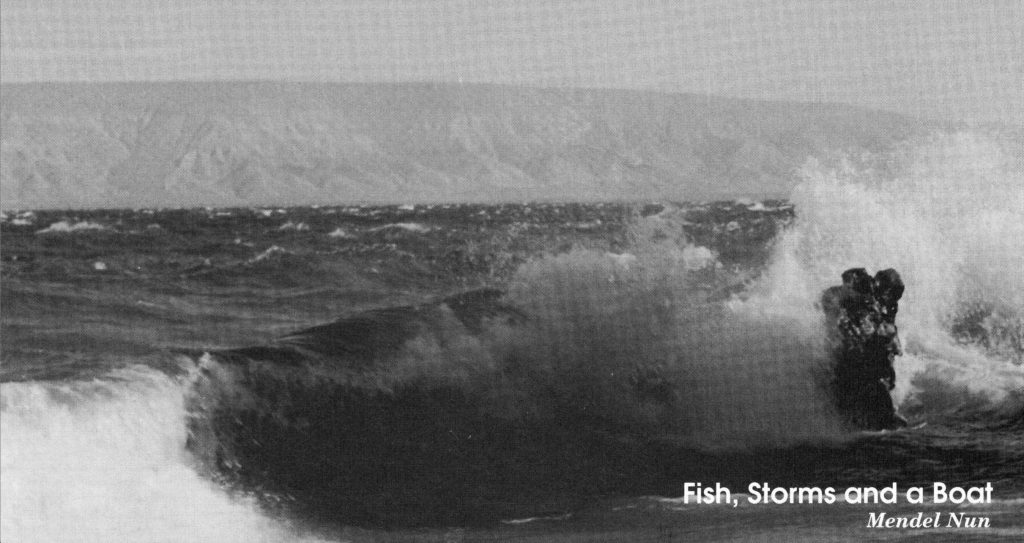 Jesus had a personal acquaintance with the life of Galilean fishermen.
 - “Let Down Your Nets”
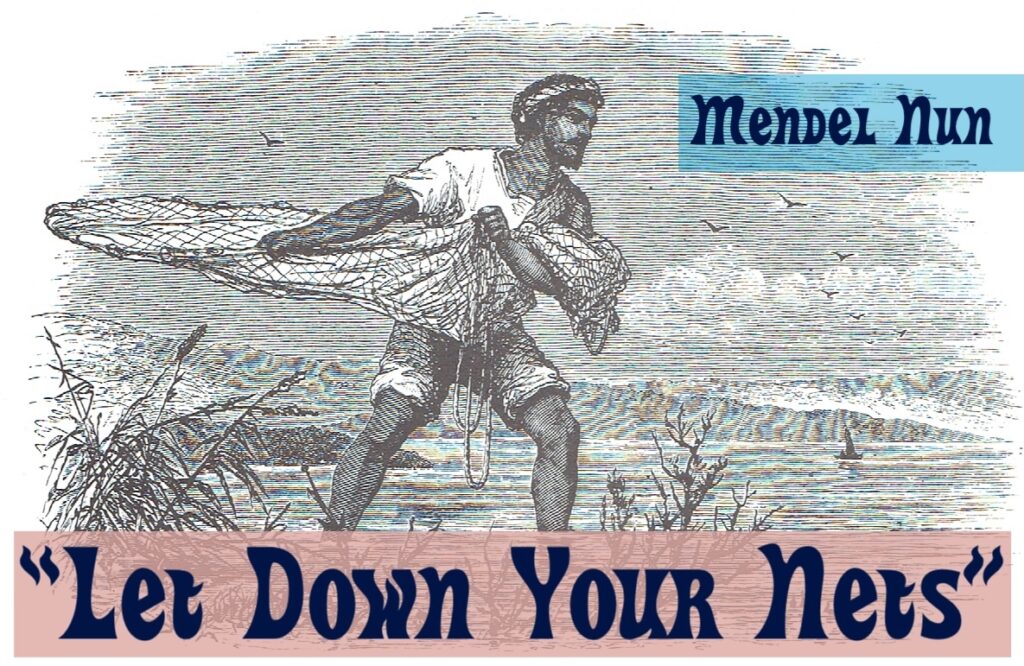 In this article Sea of Galilee fishing expert, Mendel Nun, discusses the different types of fishing nets that were used in the first century by fishermen. Nun’s knowledge of ancient fishing techniques illuminates the stories of Jesus and his followers, many of whom were fishermen.
 - The Kingdom of Heaven Is Like a Seine
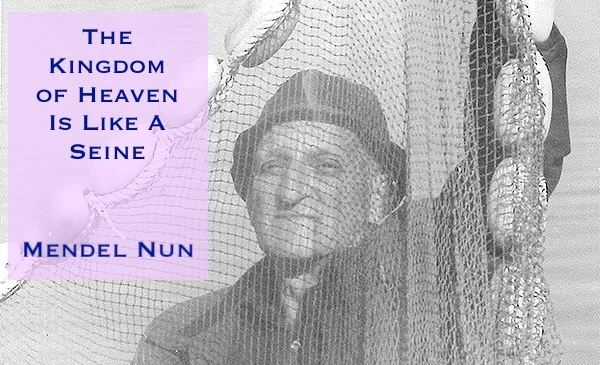 The seine was used in the Sea of Galilee until the 1950s, and my experiences in the early days of modern Jewish fishing on the Sea of Galilee have given me some practical insight into its use.
 - Fish and the Sea of Galilee
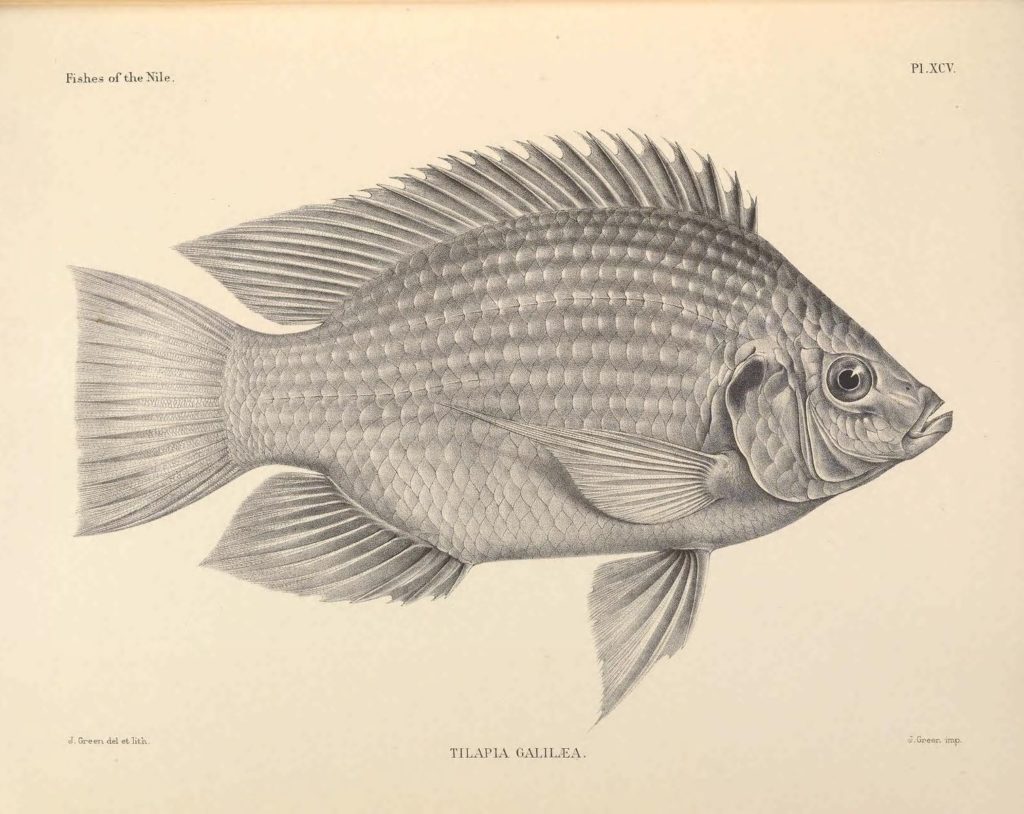 The Sea of Galilee was the scene of most of Jesus’ ministry. Fishermen and sailors were his earliest followers, and it was to them that he first preached, standing on the shore of the lake.
- [1] For examples of the Hebrew word מִדְבָּר (midbār) in this sense, see “The ‘Desert’ of Bethsaida”: Is Midbar Akin to Village Common? ↩
![Mendel Nun [1918-2010]](https://www.jerusalemperspective.com/wp-content/uploads/userphoto/18.jpg)